Project Timeline Guide: How to Plan and Manage Project Timelines Effectively
A project timeline is one of the most important tools in project management. It provides a visual representation of all tasks, milestones, deadlines, and dependencies required to complete a project successfully.
Without a clear timeline, projects often become disorganized, delayed, and difficult to manage. Teams may lose track of priorities, miss deadlines, or fail to understand how their work contributes to the overall project.
A well-structured project timeline helps teams stay aligned, improves communication, and ensures that work is completed in the correct sequence.
In this guide, you will learn what a project timeline is, why it is important, how to create one, and how to manage it effectively across different types of projects.
What Is a Project Timeline?
A project timeline is a structured plan that displays all tasks and milestones in a chronological order. It shows when each task starts, how long it takes, and when it must be completed.
Timelines help project managers and teams understand the flow of work from start to finish. They provide a clear overview of the entire project lifecycle.
A typical project timeline includes:
- Project start and end dates.
- Tasks and activities.
- Milestones and deadlines.
- Task dependencies.
- Resource allocation.
By organizing all this information visually or structurally, teams can better understand project progress and priorities.
Why Project Timelines Are Important
Project timelines are essential because they bring structure and clarity to complex work. Without a timeline, teams often rely on assumptions, which leads to confusion and inefficiency.
Key benefits of using project timelines include:
- Clear project structure and direction.
- Improved task prioritization.
- Better deadline management.
- Increased team accountability.
- Reduced risk of delays.
- Enhanced communication between stakeholders.
A timeline acts as a roadmap that guides the entire team throughout the project.
Types of Project Timelines
Different projects require different types of timelines depending on complexity, duration, and goals.
1. Simple Task Timeline
Used for small projects or individual work. It includes basic tasks and deadlines without complex dependencies.
2. Milestone Timeline
Focuses on key project milestones rather than detailed tasks. It is commonly used for reporting and high-level planning.
3. Gantt Chart Timeline
A Gantt chart provides a detailed visual timeline showing tasks, durations, and dependencies. It is widely used in professional project management.
4. Agile Timeline
Agile timelines are flexible and based on iterations or sprints. Instead of fixed long-term schedules, they focus on short-term planning cycles.
Key Elements of a Project Timeline
A well-designed project timeline includes several essential components that help ensure clarity and structure.
Tasks
Tasks represent individual pieces of work that must be completed during the project.
Milestones
Milestones mark important checkpoints in the project such as phase completion or major deliverables.
Dependencies
Dependencies define the relationship between tasks, showing which tasks must be completed before others can begin.
Deadlines
Deadlines set the expected completion dates for tasks and milestones.
Duration
Duration defines how long each task is expected to take.
How Project Timelines Work
Creating a project timeline involves breaking down a project into smaller manageable tasks and organizing them in a logical sequence.
The process typically includes:
- Defining project scope.
- Identifying tasks and activities.
- Estimating task duration.
- Setting milestones and deadlines.
- Mapping dependencies.
- Assigning responsibilities.
Once these steps are completed, the timeline provides a structured overview of how the project will progress over time.
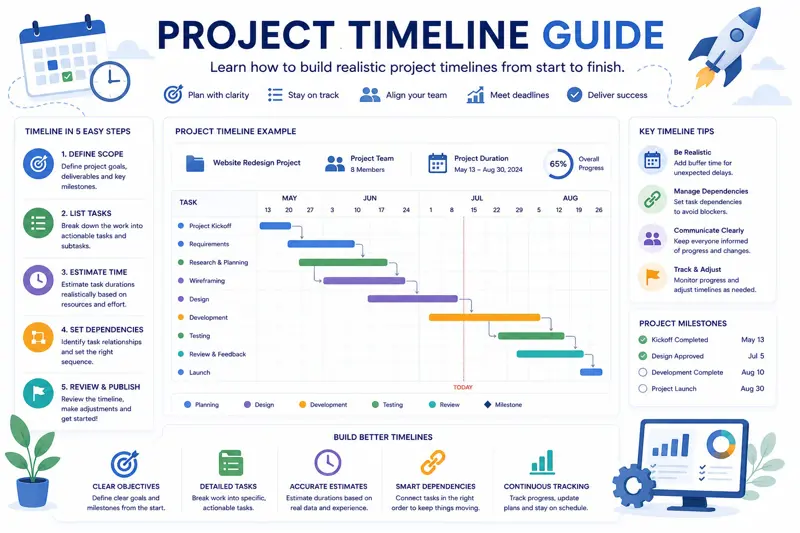
Example: Building a Project Timeline
Imagine a company launching a new website. The project is broken into phases such as design, development, testing, and deployment.
Each phase contains specific tasks with deadlines. For example, the design phase includes wireframes and UI mockups, while the development phase includes frontend and backend implementation.
By organizing all these tasks into a timeline, the team can clearly see how each step contributes to the final launch date.
Project Timeline Planning Process
Creating an effective project timeline requires a structured approach. It is not just about listing tasks, but about organizing them in a logical order that ensures smooth execution from start to finish.
A well-planned timeline helps teams understand what needs to be done, when it should be done, and how each task is connected to the overall project.
The timeline planning process typically includes several key steps.
1. Define Project Scope
The first step is to clearly define the project scope. This includes understanding project goals, deliverables, constraints, and expected outcomes.
Without a clear scope, it is impossible to create an accurate timeline because tasks and priorities will keep changing.
2. Break Down the Project Into Tasks
Once the scope is defined, the project should be divided into smaller, manageable tasks. This process is often called work breakdown structure (WBS).
Breaking work into smaller tasks makes it easier to estimate time, assign responsibilities, and track progress.
3. Estimate Task Duration
Each task must have a realistic time estimate. This is one of the most important parts of timeline planning because inaccurate estimates can lead to delays.
Estimation should consider:
- Task complexity.
- Team experience.
- Available resources.
- Possible risks or dependencies.
4. Identify Task Dependencies
Many tasks cannot start until others are completed. These relationships are called dependencies.
Understanding dependencies helps prevent bottlenecks and ensures tasks are completed in the correct order.
5. Assign Resources
After tasks and dependencies are defined, resources should be assigned. This includes team members, tools, and any required equipment.
Proper resource allocation ensures that no team member is overloaded and that work is distributed evenly.
6. Set Milestones
Milestones are key points in the project timeline that indicate progress. Examples include completion of major phases or delivery of important features.
Milestones help teams measure progress and stay aligned with project goals.
Project Timeline Visualization
A timeline becomes much more powerful when it is visualized. Visual timelines help teams quickly understand the structure of the project and identify potential issues.
Common visualization methods include:
- Gantt charts.
- Calendar views.
- Kanban boards with time tracking.
- Simple linear timelines.
Each method provides a different level of detail depending on project complexity and management needs.
Common Project Timeline Challenges
Even well-planned timelines can face challenges during execution. These issues often arise due to changing requirements, resource limitations, or inaccurate estimates.
Some common challenges include:
- Unrealistic deadlines.
- Unexpected task delays.
- Changing project requirements.
- Poor communication between teams.
- Resource shortages.
Identifying these risks early helps teams adjust the timeline before problems become critical.
Best Practices for Timeline Planning
To create reliable and effective project timelines, teams should follow proven best practices.
- Always include buffer time for unexpected delays.
- Regularly update the timeline as the project progresses.
- Involve the team in estimating task durations.
- Keep milestones realistic and achievable.
- Review dependencies carefully before finalizing the plan.
These practices help ensure that timelines remain accurate and useful throughout the project lifecycle.
Advanced Project Timeline Management
Advanced timeline management focuses on keeping project schedules accurate and adaptable even when changes occur. In real-world projects, timelines are rarely static, so the ability to adjust quickly is essential for success.
Modern project managers use dynamic scheduling techniques that allow continuous updates based on progress, resource availability, and changing priorities.
Timeline Tracking and Monitoring
Once a project timeline is created, it must be actively monitored. Tracking progress ensures that tasks are completed on time and that potential delays are identified early.
Key tracking activities include:
- Monitoring task completion status.
- Comparing planned vs actual progress.
- Identifying bottlenecks and delays.
- Updating task durations when needed.
- Adjusting dependencies and priorities.
Regular monitoring helps teams stay aligned and ensures that the project remains on schedule.
Adjusting and Updating Timelines
No project timeline remains unchanged from start to finish. Adjustments are necessary when new information becomes available or when unexpected events occur.
Common reasons for timeline adjustments include:
- Changes in project scope.
- Resource availability issues.
- Delays in dependent tasks.
- New client or stakeholder requirements.
- Technical challenges or risks.
Flexible timeline management ensures that teams can adapt without losing control of the project.
Timeline Management Tools
Many organizations use digital tools to manage project timelines more efficiently. These tools provide real-time visibility and make collaboration easier.
Common features include:
- Interactive Gantt charts.
- Task scheduling and reminders.
- Dependency tracking.
- Progress dashboards.
- Team collaboration features.
Using these tools helps reduce errors and improves communication across teams.
Example: Managing a Complex Project Timeline
Consider a product development project involving multiple teams such as design, development, testing, and marketing.
At the beginning, a detailed timeline is created with milestones for each phase. As the project progresses, some tasks take longer than expected, while others finish early.
The project manager continuously updates the timeline, reassigns resources, and adjusts deadlines to ensure the final delivery date is met without compromising quality.
Frequently Asked Questions
What is the difference between a timeline and a schedule?
A timeline shows the overall sequence and duration of tasks, while a schedule focuses on specific time slots and detailed planning of activities.
How detailed should a project timeline be?
The level of detail depends on project complexity. Simple projects need basic timelines, while complex projects require detailed task breakdowns and dependencies.
Can project timelines change?
Yes. Project timelines are dynamic and should be updated regularly based on progress, risks, and changing requirements.
Final Thoughts
A well-designed project timeline is essential for successful project execution. It provides structure, improves communication, and ensures that all team members understand what needs to be done and when.
By combining proper planning, regular tracking, and flexible adjustments, organizations can significantly improve project outcomes and reduce delays.
MyPlannerDesk helps teams create and manage project timelines with ease by offering interactive Gantt charts, task tracking, milestone management, workload balancing, and real-time progress monitoring.
With the right tools and structured timeline management practices, teams can deliver projects more efficiently, stay organized, and achieve their goals on time.