How to Plan Employee Vacations Without Affecting Productivity
Employee vacations are essential for maintaining a healthy, motivated, and productive workforce. Well-rested employees are generally happier, more engaged, and less likely to experience burnout. However, poor vacation planning can create staffing shortages, delay important projects, reduce customer service quality, and increase stress for the employees who remain at work.
Many businesses still manage vacation requests using spreadsheets, paper forms, or long email conversations. While this approach may work for very small teams, it quickly becomes difficult as the organization grows.
The solution is not denying vacation requests—it's planning them effectively. A structured vacation planning process allows employees to take time off while ensuring that business operations continue without disruption.
In this guide, you'll learn practical strategies for planning employee vacations, avoiding scheduling conflicts, maintaining project deadlines, and using modern planning tools to simplify the entire process.
Why Vacation Planning Is More Important Than Ever
Today's organizations operate with tighter deadlines, leaner teams, and higher customer expectations than ever before.
When several employees take leave simultaneously without proper planning, projects may stop completely. Customer requests may remain unanswered, managers become overwhelmed, and coworkers must handle additional responsibilities.
Good vacation planning benefits everyone.
- Employees receive predictable approval processes.
- Managers maintain adequate staffing levels.
- Projects continue according to schedule.
- Customers experience consistent service.
- The business avoids unnecessary overtime.
Instead of reacting to vacation requests individually, successful organizations create transparent planning processes that balance employee needs with business requirements.
Create a Clear Vacation Policy
One of the most common reasons for conflicts is the absence of clear rules. Employees should understand exactly how vacation requests are submitted, approved, and prioritized.
A good vacation policy typically defines:
- How far in advance requests should be submitted.
- Who approves vacation requests.
- Peak periods when leave may be restricted.
- Maximum number of employees absent at the same time.
- Procedures for emergency leave.
- How unused vacation days are handled.
When everyone follows the same process, managers spend less time resolving conflicts and employees know what to expect.
Know Your Busy Seasons
Every business has periods when employee availability becomes especially important.
For example:
| Industry | Busy Period |
|---|---|
| Retail | November–December |
| Accounting | Tax Season |
| Construction | Spring and Summer |
| Tourism | Holiday Seasons |
| Software Development | Before Major Product Releases |
Understanding these periods helps managers approve vacations without jeopardizing critical business activities.
Plan Vacations Early
The earlier vacation planning begins, the more options everyone has.
Many organizations ask employees to submit their preferred vacation periods at the beginning of the year.
Early planning provides several advantages:
- Managers can identify scheduling conflicts.
- Departments remain adequately staffed.
- Projects can be scheduled accordingly.
- Employees have enough time to adjust their plans.
Waiting until the last minute usually results in difficult decisions and disappointed employees.
Maintain Minimum Staffing Levels
Every department should define its minimum staffing requirements.
For example, a customer support department with ten employees may require at least seven people to be available every day.
This means only three employees can be on vacation simultaneously.
| Department | Total Employees | Minimum Required | Maximum on Leave |
|---|---|---|---|
| Customer Support | 10 | 7 | 3 |
| Sales | 8 | 6 | 2 |
| Development | 15 | 12 | 3 |
| Accounting | 5 | 4 | 1 |
These limits help ensure that daily operations continue even during peak vacation periods.
Consider Ongoing Projects
Vacation planning should always take current projects into account.
Imagine a software implementation scheduled for the first week of July. If the project manager, lead developer, and QA engineer all take vacation at the same time, the implementation may be delayed despite months of preparation.
Before approving leave requests, managers should review:
- Upcoming project milestones.
- Customer deadlines.
- Product launches.
- Major company events.
- Contractual obligations.
Balancing vacations with project schedules protects both employee wellbeing and business performance.
Use a Shared Vacation Calendar
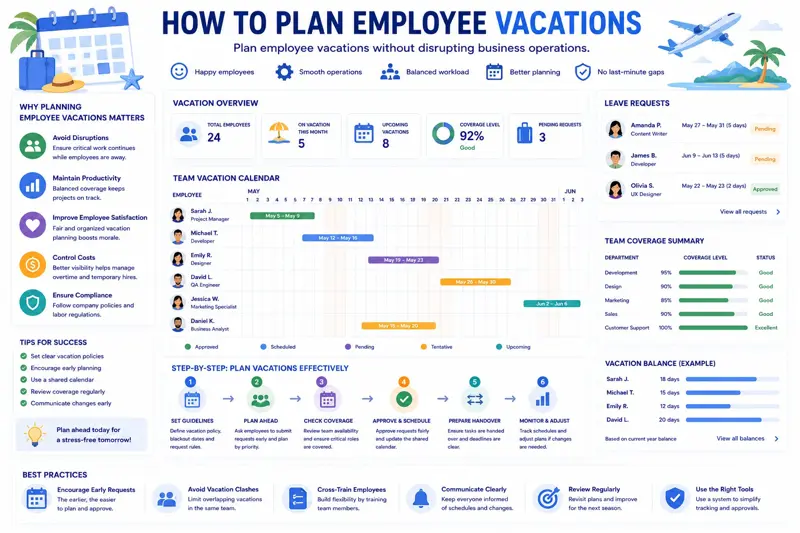
One of the easiest improvements any company can make is creating a shared vacation calendar.
Instead of searching through emails or spreadsheets, managers can instantly see who is available on any given day.
A centralized vacation calendar should display:
- Approved vacations.
- Pending requests.
- Public holidays.
- Sick leave.
- Business trips.
- Training days.
Having complete visibility prevents accidental scheduling conflicts and makes planning much faster.
If your company still manages employee schedules in spreadsheets, you may also find our guide Planner vs Excel – Which Is Better? helpful.
And because employee availability directly affects project delivery, we also recommend reading How to Track Project Progress Effectively , which explains how successful organizations monitor deadlines, workloads, and team performance.
Create a Simple Vacation Approval Process
One of the biggest causes of frustration in many organizations is an unclear vacation approval process. Employees submit requests but don't know when they will receive a response, while managers struggle to keep track of pending applications.
A standardized workflow makes the process predictable for everyone.
A typical approval process looks like this:
- Employee submits a vacation request.
- Manager reviews team availability.
- Current projects and deadlines are checked.
- Potential scheduling conflicts are identified.
- The request is approved or an alternative period is suggested.
- The vacation calendar is updated automatically.
This process usually takes only a few minutes when all employee schedules are stored in one centralized system.
Choose Fair Approval Rules
Employees are much more likely to accept vacation decisions when the approval rules are transparent and consistently applied.
Some organizations approve requests on a first-come, first-served basis, while others use additional criteria such as project responsibilities or previous holiday allocations.
Common approaches include:
- First submitted request receives priority.
- Employees rotate popular vacation periods each year.
- Critical business roles require additional approval.
- Managers balance employee preferences with operational needs.
Whatever method you choose, consistency is more important than the specific rule itself.
Cross-Train Employees Before Vacation Season
Many companies discover too late that only one employee knows how to perform a critical task.
If that employee takes vacation or becomes unavailable unexpectedly, important work may stop completely.
Cross-training helps eliminate this risk by ensuring multiple employees can perform essential responsibilities.
Examples include:
- Customer support agents covering each other's accounts.
- Accountants sharing month-end procedures.
- Developers documenting deployment processes.
- Project managers sharing project documentation.
Cross-training improves vacation flexibility while reducing operational risk.
Plan Around Public Holidays
Public holidays often create unexpected staffing challenges.
Many employees request vacation immediately before or after national holidays, resulting in extended absences across the organization.
Managers should review holiday calendars well in advance and estimate expected staffing levels during these periods.
For example, if a public holiday falls on Thursday, many employees may request Friday as vacation, effectively creating a four-day weekend.
Planning ahead allows businesses to maintain customer service without denying every request.
Vacation Planning for Small Businesses
Small businesses often operate with limited staff, making every absence more significant.
If a company has only six employees, losing two key team members simultaneously may reduce productivity dramatically.
Small businesses benefit from:
- Planning vacations several months in advance.
- Cross-training employees.
- Using shared calendars.
- Avoiding overlapping leave for critical roles.
- Communicating openly about busy periods.
With proper planning, even very small companies can provide employees with flexibility while maintaining business continuity.
Vacation Planning for Remote Teams
Remote work introduces additional scheduling challenges because employees may work across different countries and time zones.
Managers should consider:
- National holidays in different countries.
- Time zone differences.
- Regional vacation seasons.
- Customer support coverage.
- Project collaboration requirements.
A centralized leave calendar helps remote teams understand who is available without sending multiple messages or emails.
Monitor Remaining Vacation Balances
Another common problem occurs when employees postpone most of their vacation until the end of the year.
This often results in several employees requesting leave during the same period, making approval much more difficult.
Managers should regularly review remaining vacation balances and encourage employees to spread their leave throughout the year.
Doing so improves workforce availability while helping employees maintain a healthier work-life balance.
Example: Vacation Planning for a Company with 50 Employees
Consider a software company employing fifty people across four departments.
| Department | Employees | Maximum Simultaneous Leave |
|---|---|---|
| Development | 20 | 4 |
| Customer Support | 12 | 3 |
| Sales | 10 | 2 |
| Administration | 8 | 2 |
Using these limits allows managers to approve vacations quickly while ensuring that every department remains fully operational.
Avoid These Common Vacation Planning Mistakes
- Approving requests without checking team availability.
- Ignoring project deadlines.
- Using multiple spreadsheets.
- Waiting until summer to start planning.
- Keeping vacation balances manually.
- Not documenting approval decisions.
- Allowing critical employees to take leave simultaneously.
- Failing to communicate approved vacations to the team.
Most of these problems can be prevented by using one centralized planning system and establishing clear approval rules before vacation season begins.
Good vacation planning also improves overall workload management. If you're looking to organize employee schedules more effectively, read our guide How to Organize Employees' Workday , which explains practical strategies for balancing daily responsibilities across your team.
Create an Annual Vacation Planning Strategy
Successful organizations do not treat vacation planning as a seasonal activity. Instead, they create an annual strategy that balances employee preferences with business objectives throughout the entire year.
A typical annual planning process includes:
- Collect employee vacation preferences.
- Review business peak periods.
- Identify project milestones.
- Define minimum staffing levels.
- Approve requests in phases.
- Review and adjust plans quarterly.
Planning early gives employees greater flexibility while reducing scheduling conflicts later in the year.
Encourage Employees to Plan Ahead
Employees also play an important role in successful vacation planning. Waiting until the last minute often reduces available options and increases the likelihood of scheduling conflicts.
Encourage employees to:
- Submit requests as early as possible.
- Coordinate with coworkers on shared responsibilities.
- Complete critical tasks before taking leave.
- Prepare handover notes for colleagues.
- Notify customers if necessary.
When employees actively participate in planning, managers spend less time resolving conflicts and projects continue with minimal disruption.
Prepare for Employee Absences
Approving a vacation request is only the first step. Managers should also ensure that ongoing work continues smoothly while employees are away.
Before an employee begins vacation, consider the following checklist:
- Complete high-priority tasks.
- Assign backup responsibilities.
- Update project documentation.
- Inform customers if required.
- Share important passwords or access rights securely.
- Review upcoming deadlines.
Preparation significantly reduces disruptions and helps employees enjoy their time off without worrying about unfinished work.
Use Reports to Improve Future Planning
Modern leave management systems provide valuable reports that help managers make better decisions year after year.
Useful reports include:
- Vacation utilization by department.
- Remaining leave balances.
- Peak absence periods.
- Average approval time.
- Employee availability trends.
- Department staffing reports.
Analyzing this information helps organizations improve scheduling policies and identify recurring staffing challenges.
Vacation Planning Checklist
Use this checklist before approving vacation requests:
- Check department staffing levels.
- Review project deadlines.
- Verify employee leave balance.
- Identify overlapping requests.
- Assign backup responsibilities.
- Update the shared vacation calendar.
- Notify affected team members.
- Confirm customer coverage if necessary.
- Review business peak periods.
- Approve or suggest an alternative period.
Following a consistent checklist helps managers make fair decisions while keeping operations running smoothly.
Best Practices for HR Managers
- Create one centralized leave calendar.
- Standardize approval workflows.
- Review staffing forecasts monthly.
- Cross-train employees regularly.
- Encourage early vacation requests.
- Communicate staffing requirements clearly.
- Monitor leave balances throughout the year.
- Use reporting to improve future planning.
- Keep vacation policies transparent.
- Review the planning process annually.
Related Articles
Continue improving your workforce planning with these practical guides:
- How to Organize Employees' Workday
- Time Blocking Explained
- How to Track Project Progress Effectively
- How to Reduce Project Delays
- Planner vs Excel – Which Is Better?
- Kanban vs Gantt – When Should You Use Each?
Frequently Asked Questions
When should employees submit vacation requests?
Whenever possible, employees should submit requests several weeks or even months in advance, especially during busy holiday seasons.
How many employees should be allowed on vacation at the same time?
The answer depends on department size and workload. Most organizations define minimum staffing levels to ensure business continuity.
What is the best way to track employee vacations?
A centralized digital calendar provides the best visibility, allowing managers to see approved leave, pending requests, public holidays, and employee availability in one place.
How can small businesses manage vacations effectively?
Small businesses should plan early, cross-train employees, maintain shared calendars, and avoid approving overlapping leave for key positions.
Should project deadlines affect vacation approval?
Yes. Vacation planning should always consider important milestones and customer commitments to avoid unnecessary project delays.
How can companies reduce vacation scheduling conflicts?
Clear policies, transparent approval rules, early planning, and centralized scheduling tools significantly reduce conflicts.
Why is a shared vacation calendar important?
It provides immediate visibility into employee availability, helping managers avoid scheduling conflicts and maintain adequate staffing levels.
Can vacation planning improve employee satisfaction?
Absolutely. Employees appreciate transparent processes, predictable decisions, and fair treatment, all of which contribute to higher engagement and morale.
Final Thoughts
Effective vacation planning is not simply about approving leave requests—it is about balancing employee well-being with business continuity. Organizations that plan ahead, communicate clearly, and use structured scheduling processes can support their employees while maintaining productivity throughout the year.
Whether you manage a small business or a large organization, a centralized vacation planning system reduces administrative work, prevents scheduling conflicts, and helps every department stay fully operational.
MyPlannerDesk combines employee scheduling, vacation management, task planning, project tracking, and team calendars in one centralized workspace. Managers can approve leave requests, monitor employee availability, coordinate project schedules, and keep the entire team informed without relying on spreadsheets or lengthy email chains.
The result is a more organized workplace, happier employees, and fewer operational disruptions throughout the year.