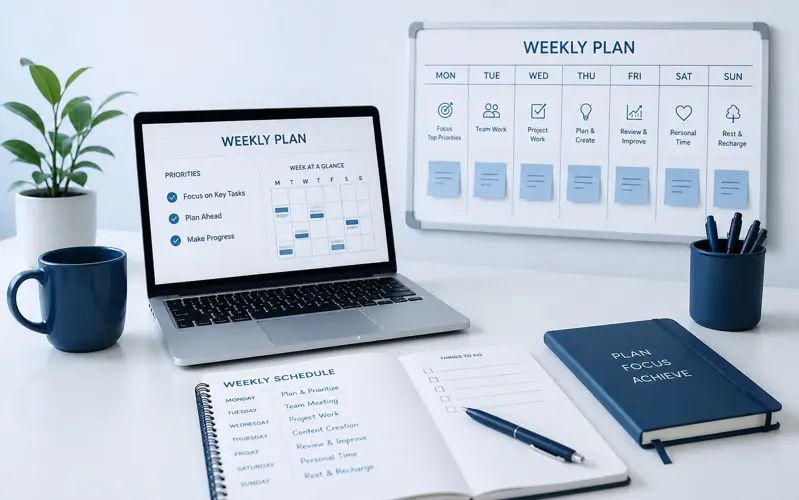
Weekly Planning Guide: How to Plan Your Week for Better Productivity and Organization
Successful weeks rarely happen by accident. Behind every productive team, efficient manager, and organized professional is a structured weekly planning process. Instead of reacting to problems as they arise, effective planning allows you to prioritize important work, allocate resources wisely, and maintain steady progress toward long-term goals.
Weekly planning provides a broader perspective than daily planning. Rather than focusing only on today's tasks, it helps you organize an entire week of projects, meetings, deadlines, and personal responsibilities. This larger view makes it easier to balance workloads, identify potential scheduling conflicts, and prepare for upcoming priorities before they become urgent.
Whether you work independently, manage a small team, or oversee multiple projects across an organization, investing time in weekly planning can improve productivity, reduce stress, and create more predictable results.
Modern project management software makes weekly planning even more effective by combining task management, calendars, project schedules, resource planning, and team collaboration in a single platform. Instead of maintaining separate spreadsheets, notebooks, and calendars, teams can coordinate their work from one centralized workspace.
In this guide, you'll learn how to build an effective weekly planning routine, set priorities, organize meetings, balance workloads, avoid common planning mistakes, and use digital planning tools to keep projects moving forward.
What Is Weekly Planning?
Weekly planning is the process of organizing your priorities, tasks, meetings, and deadlines for the upcoming week before the work begins. It provides a high-level roadmap that guides your daily decisions while keeping your attention focused on larger business objectives.
Instead of creating isolated daily to-do lists, weekly planning allows you to see how every task contributes to ongoing projects and long-term goals.
A well-prepared weekly plan often includes:
- Major project milestones.
- Important deadlines.
- Customer meetings.
- Team meetings.
- High-priority tasks.
- Resource allocation.
- Time for administrative work.
- Buffer time for unexpected issues.
With a complete overview of the week, it becomes much easier to make informed decisions about priorities and workload distribution.
Why Weekly Planning Matters
Without a weekly plan, many professionals spend Monday morning deciding where to begin. Valuable time is lost reviewing emails, searching for information, and reacting to the loudest or most recent requests rather than focusing on the most important work.
Weekly planning replaces uncertainty with structure. Instead of making dozens of planning decisions every day, many of those decisions are made once at the beginning of the week.
Benefits include:
- Better organization.
- Clear priorities.
- Improved workload balance.
- More consistent project progress.
- Fewer missed deadlines.
- Reduced stress.
- Improved collaboration.
- Better use of available time.
Planning ahead also makes it easier to anticipate conflicts before they disrupt important projects.
Choose the Right Time to Plan Your Week
Many professionals plan their week either on Friday afternoon or Monday morning. Both approaches have advantages.
Planning on Friday allows you to leave work knowing exactly what should happen next week. Planning on Monday provides an opportunity to account for new information that arrived over the weekend.
Whichever approach you choose, consistency is more important than the exact day.
A weekly planning session typically takes between 20 and 45 minutes depending on the complexity of your work.
Review the Previous Week
Effective planning begins by evaluating what happened during the previous week. Understanding completed work, unfinished tasks, and unexpected challenges helps create a more realistic plan for the week ahead.
Questions to ask include:
- Which goals were achieved?
- Which deadlines were missed?
- What caused delays?
- Which tasks remain unfinished?
- Did any meetings produce new action items?
- What should receive greater attention this week?
This review provides valuable insight while preventing unfinished work from being forgotten.
Set Weekly Priorities
Not every task deserves equal attention. One of the primary goals of weekly planning is deciding which activities will have the greatest impact during the coming week.
Many professionals identify three to five major objectives instead of trying to complete everything simultaneously.
| Priority | Typical Examples |
|---|---|
| High | Project milestones, customer deadlines, major deliverables. |
| Medium | Planning, documentation, internal meetings. |
| Low | Administrative work, routine maintenance, optional improvements. |
Weekly priorities provide direction for daily planning throughout the week.
Schedule Important Work First
One of the most common planning mistakes is filling the calendar with meetings before reserving time for meaningful work.
Instead, begin by scheduling activities that contribute directly to important business goals. Meetings, administrative work, and routine tasks can then be organized around those priorities.
For example, reserve uninterrupted time for:
- Project planning.
- Customer deliverables.
- Software development.
- Writing reports.
- Financial analysis.
- Strategic planning.
Protecting focused work periods throughout the week greatly improves both productivity and work quality.
Balance Workloads Across the Week
Many people unintentionally overload Mondays and Fridays while leaving the middle of the week relatively open. Weekly planning helps distribute work more evenly.
Consider spreading demanding activities throughout the week instead of scheduling everything as early as possible.
A balanced schedule reduces pressure while making it easier to adapt if unexpected priorities emerge.
Example Weekly Schedule
| Day | Main Focus |
|---|---|
| Monday | Weekly planning, project kickoff, priority tasks. |
| Tuesday | Focused project work and customer meetings. |
| Wednesday | Team collaboration and milestone reviews. |
| Thursday | Project execution and documentation. |
| Friday | Progress review, reporting, next week's planning. |
Every organization will develop its own rhythm, but maintaining a consistent structure helps employees establish productive routines.
If you're looking for strategies to improve day-to-day organization, continue with Daily Planning Guide.
To learn how to organize larger initiatives, read Project Planning Step by Step.
You may also find Project Management: The Complete Guide helpful for understanding how weekly planning supports successful project delivery.
Plan Meetings with Purpose
Meetings are necessary for collaboration, but they should support productive work rather than consume the entire week. During your weekly planning session, review every scheduled meeting and determine whether it has a clear objective, the right participants, and an expected outcome.
Whenever possible, group meetings into dedicated blocks instead of scattering them throughout the week. This creates longer periods of uninterrupted time for deep, focused work.
Before scheduling a meeting, ask yourself:
- Is this meeting necessary?
- Can the issue be resolved with an email or message?
- Does the meeting have a clear agenda?
- Who actually needs to attend?
- What decisions should be made?
Reducing unnecessary meetings often frees several hours every week without reducing communication.
Coordinate Team Workloads
Weekly planning is not only about managing your own schedule. Managers also need to ensure that work is distributed fairly across the team.
Without workload planning, some employees become overloaded while others have unused capacity. This imbalance leads to missed deadlines, reduced morale, and lower productivity.
During weekly planning, review:
- Current project assignments.
- Upcoming deadlines.
- Vacation schedules.
- Employee availability.
- Resource conflicts.
- New incoming work.
Adjusting assignments at the beginning of the week is much easier than trying to solve problems after deadlines begin slipping.
Leave Space for Unexpected Work
Every week includes surprises. Customers submit urgent requests, production issues arise, employees become unavailable, and priorities change.
A common planning mistake is scheduling every available hour. While this may look efficient on paper, it leaves no flexibility when unexpected work appears.
Instead, reserve part of each day for:
- Urgent customer requests.
- Problem solving.
- Project changes.
- Internal support.
- Emergency meetings.
Buffer time protects your overall schedule and prevents small disruptions from affecting the entire week's plan.
Connect Weekly Planning with Project Goals
Weekly planning becomes much more effective when every activity supports a larger project objective.
Rather than simply completing random tasks, employees should understand how their weekly responsibilities contribute to project milestones, customer deliverables, and business goals.
For example, instead of writing "Finish documentation," a weekly objective might be:
- Complete documentation required for the product release.
- Finalize customer proposal before Friday.
- Prepare project milestone presentation.
- Finish testing before deployment.
Connecting tasks with larger objectives helps employees prioritize more effectively throughout the week.
Weekly Planning for Managers
Managers often balance strategic responsibilities with operational demands. Weekly planning helps create time for both.
A manager's weekly plan typically includes:
- Project reviews.
- Customer meetings.
- Team meetings.
- Performance discussions.
- Budget reviews.
- Resource planning.
- Decision-making sessions.
- Strategic planning.
Without a structured weekly schedule, urgent operational issues often consume all available time, leaving little opportunity for long-term planning.
Weekly Planning for Employees
Employees also benefit from planning beyond individual days.
A weekly plan provides visibility into upcoming deadlines and helps employees avoid last-minute rushes by spreading work across several days.
A productive weekly routine might include:
- Review assigned projects.
- Identify weekly priorities.
- Schedule focused work sessions.
- Prepare for customer meetings.
- Update task progress regularly.
- Review accomplishments on Friday.
This structured approach improves accountability while reducing stress caused by unexpected deadlines.
Weekly Planning for Remote Teams
Remote teams rely heavily on planning because employees work independently and may be located in different cities or time zones.
Weekly planning provides a shared understanding of priorities and expectations. Team members know what needs to be completed, when meetings will occur, and which milestones are approaching.
Successful remote teams often begin each week by:
- Reviewing project priorities.
- Updating shared task boards.
- Confirming meeting schedules.
- Checking resource availability.
- Identifying potential blockers.
Consistent planning keeps distributed teams aligned despite physical distance.
Digital Weekly Planning vs Paper Planning
Traditional paper planners remain useful for personal organization, but digital planning tools provide significantly greater flexibility for teams and growing organizations.
| Feature | Paper Planner | Digital Planner |
|---|---|---|
| Easy updates | Limited | Yes |
| Shared calendars | No | Yes |
| Task assignments | No | Yes |
| Automatic reminders | No | Yes |
| Progress tracking | Manual | Automatic |
| Team collaboration | No | Yes |
For individuals, either approach can be effective. However, organizations that manage multiple employees and projects usually benefit from digital planning systems that integrate calendars, task management, and reporting.
Example: Software Development Team
A software development team begins every Monday by reviewing sprint goals, customer priorities, bug reports, and upcoming releases.
Developers schedule focused coding sessions early in the week, testers reserve time for quality assurance before release deadlines, and project managers coordinate customer meetings and progress reviews.
Because everyone understands the week's priorities, fewer tasks remain unfinished and project delivery becomes more predictable.
Example: Construction Company
A construction company uses weekly planning to coordinate contractors, equipment, inspections, and material deliveries.
Before each week begins, managers review weather forecasts, employee availability, supplier schedules, and milestone deadlines. Potential delays are identified early, allowing schedules to be adjusted before work on-site is affected.
If you'd like to improve individual productivity throughout the week, continue with Time Management: The Complete Guide.
To learn how to organize employee responsibilities more effectively, read How to Organize an Employee's Workday.
You may also find Workload Management: The Complete Guide helpful for balancing assignments across multiple employees and projects.
Best Practices for Successful Weekly Planning
An effective weekly planning routine is built on consistency rather than complexity. Spending thirty minutes planning your week can save several hours of unnecessary work, reduce stress, and help your team stay focused on the activities that create the greatest value.
The following practices can help you improve the quality of your weekly plans:
- Review the previous week before planning the next one.
- Set three to five major weekly objectives.
- Schedule important work before filling your calendar with meetings.
- Leave buffer time for unexpected requests.
- Balance workloads across the entire team.
- Review project milestones every week.
- Update priorities as projects evolve.
- Reserve uninterrupted time for focused work.
- Track weekly progress instead of waiting until deadlines arrive.
- Prepare the following week's plan before finishing Friday.
These habits create a predictable planning process that becomes easier to maintain over time.
Planning Multiple Projects
Many professionals no longer work on a single project. Managers, consultants, developers, marketers, and engineers often divide their time across several initiatives simultaneously.
Weekly planning becomes especially valuable in these situations because it provides visibility into competing priorities.
Instead of focusing on only one project at a time, review every active project during your planning session and identify:
- Upcoming deadlines.
- Critical milestones.
- Required customer communication.
- Resource conflicts.
- Tasks that depend on other teams.
- Potential risks.
Seeing every project together helps prevent one urgent assignment from delaying another equally important initiative.
Monitor Progress Throughout the Week
Weekly planning should not be treated as a one-time activity completed every Monday morning. Plans should evolve as work progresses.
Take a few minutes each day to compare completed work with the original weekly plan.
Ask yourself:
- Are projects progressing as expected?
- Have any priorities changed?
- Are deadlines still realistic?
- Does anyone need additional support?
- Should tasks be reassigned?
Small adjustments during the week prevent major schedule changes later.
Measure Weekly Success
Weekly planning becomes more valuable when results are measured consistently. Rather than simply checking whether employees stayed busy, evaluate whether the week's most important objectives were achieved.
Useful performance indicators include:
- Projects completed on schedule.
- Milestones achieved.
- Tasks completed.
- Customer commitments delivered.
- Resource utilization.
- Team workload balance.
- Overdue assignments.
- Time spent on priority work.
Tracking these indicators helps organizations improve future planning while identifying recurring problems.
Common Weekly Planning Mistakes
Even experienced professionals sometimes create weekly plans that are difficult to execute. Most planning problems are caused by unrealistic expectations or poor prioritization.
Common mistakes include:
- Scheduling every available hour.
- Ignoring resource availability.
- Accepting too many meetings.
- Failing to prioritize important work.
- Not reviewing unfinished tasks.
- Ignoring project dependencies.
- Creating plans that are never updated.
- Working without measurable weekly goals.
- Underestimating the time required for complex tasks.
- Leaving planning until the last minute.
Avoiding these habits makes weekly planning significantly more effective and reduces unnecessary stress.
Friday Review Checklist
Ending the week with a structured review prepares you for a stronger start the following Monday.
Before finishing work on Friday, review:
- Completed projects.
- Remaining tasks.
- Upcoming deadlines.
- Customer commitments.
- Team workload for next week.
- Pending approvals.
- Meetings already scheduled.
- New priorities that emerged during the week.
This review creates continuity between weeks and reduces time spent organizing Monday morning.
Weekly Planning for Growing Organizations
As organizations grow, informal planning methods become increasingly difficult to maintain. More employees, more projects, and more customers require greater visibility into schedules, workloads, and resource allocation.
Weekly planning provides managers with a structured process for coordinating multiple departments while ensuring everyone understands current priorities.
Combined with project management software, weekly planning becomes a central part of business operations rather than an individual productivity exercise.
Frequently Asked Questions
When should I plan my week?
Most professionals plan either on Friday afternoon or Monday morning. The best choice depends on your workflow, but maintaining a consistent routine is more important than the exact day.
How long should weekly planning take?
For most people, twenty to forty-five minutes is sufficient. Larger projects or management roles may require additional time.
How many weekly goals should I set?
Three to five major objectives are usually easier to achieve than a long list of competing priorities.
Should I schedule every task?
Not necessarily. Schedule important work and major deadlines while leaving enough flexibility for unexpected requests and changing priorities.
Can weekly planning improve team productivity?
Yes. Weekly planning helps distribute work evenly, improves communication, clarifies priorities, and reduces missed deadlines.
Is weekly planning useful for small businesses?
Absolutely. Even very small teams benefit from having a structured overview of projects, meetings, customer commitments, and upcoming deadlines.
Related Articles
- Daily Planning Guide
- Time Management: The Complete Guide
- Project Planning Step by Step
- Project Management: The Complete Guide
- Task Management: The Complete Guide
- Resource Management: The Complete Guide
- Workload Management: The Complete Guide
- How to Track Project Progress Effectively
- Team Collaboration Guide
- How to Organize an Employee's Workday
Final Thoughts
Weekly planning provides the bridge between long-term strategy and daily execution. By reviewing priorities, organizing workloads, scheduling focused work, and preparing for upcoming deadlines, professionals gain greater control over their time while reducing unnecessary stress and last-minute changes.
The most successful organizations treat weekly planning as an ongoing process rather than a one-time event. Regular reviews, realistic scheduling, balanced workloads, and continuous progress tracking help teams stay aligned even as priorities evolve throughout the week.
MyPlannerDesk simplifies weekly planning by bringing together project management, task management, shared calendars, Kanban boards, Gantt charts, employee scheduling, workload management, time tracking, dashboards, and reporting in one centralized platform. Instead of coordinating multiple spreadsheets, notebooks, and calendars, teams can plan, assign, monitor, and complete work from a single workspace with complete visibility into projects and resources.
Whether you manage a small business, lead a growing team, or coordinate multiple complex projects, building a consistent weekly planning routine will help improve productivity, strengthen collaboration, and ensure that important goals are achieved week after week.